
A Southwest Florida beach ceremony can feel wonderfully simple: soft sand beneath your feet, the Gulf glowing at sunset, and the people you love gathered close. But the season you choose shapes far more than the backdrop. It affects the temperature, the crowd level, your photography, dinner reservations, and how relaxed you feel when the moment arrives.
For couples searching “best time for Florida beach wedding,” the short answer is usually late fall through spring. The more helpful answer is that each season offers a different kind of celebration. A February sunset elopement feels very different from a quiet June morning ceremony, even when both take place on the same beautiful shoreline.
Best Time for a Florida Beach Wedding in Southwest Florida
For most couples, November through April is the sweet spot for a beach wedding in Naples, Marco Island, or Fort Myers Beach. Days are typically less humid, evenings are more comfortable, and the chance of an afternoon thunderstorm is lower than it is in summer. This is the season for couples who picture formal attire, sunset portraits, and an outdoor dinner without worrying quite as much about the heat.
Within that window, March through early May often brings a particularly lovely balance. The weather is warm but generally not at its summer intensity, the Gulf is inviting, and sunset ceremonies have a gentle, celebratory feel. November can be equally beautiful, especially for couples who want warm water and a more relaxed transition into the holiday season.
The trade-off is demand. Winter and early spring are popular throughout Southwest Florida, especially around school breaks, holidays, and seasonal travel peaks. Beaches, restaurants, and accommodations can be busier, and the most desired ceremony times may book sooner. For an intimate wedding, that does not have to take away from the experience, but it does make early planning worthwhile.
December through February: Comfortable and romantic
Winter is often ideal for couples traveling from colder parts of the country. Florida still feels like an escape, while the beach is comfortable enough for a ceremony later in the afternoon. Temperatures can vary, and a cool breeze after sunset is possible, so a light wrap or jacket is a thoughtful addition for the couple and guests.
This is a wonderful season for a polished sunset ceremony followed by dinner nearby. The light is softer, the air often feels crisp and clear, and your flowers and attire are less likely to be affected by heat. Because daylight ends earlier, your ceremony timing needs to be planned carefully around sunset and portrait time.
March through May: Beautiful weather with a little more warmth
Spring is one of the most requested times for intimate Florida beach weddings. March and April are especially attractive for their warm days, comfortable evenings, and bright coastal color. May begins to feel more tropical, but it can still be an excellent choice for a sunset ceremony or a morning elopement.
Spring also brings higher visitor numbers in many beach communities. If privacy matters most, a weekday ceremony, an early-morning time, or a less crowded stretch of beach can make a meaningful difference. A local ceremony professional can help you choose a location and timing that feels more personal without losing the view you came for.
June through October: Tropical, flexible, and worth considering
Summer and early fall are not automatically off the table. In fact, they can be ideal for couples who want warmer Gulf water, a more flexible travel budget, or a smaller, less crowded celebration. The beach has a lush, tropical feel, and summer sunsets can be spectacular.
The consideration is weather. Southwest Florida summers are hot and humid, and afternoon rain showers are common. Hurricane season runs from June through November, with the greatest activity often occurring later in the season. That does not mean a beach wedding cannot be beautiful during these months. It simply means the plan should be realistic, flexible, and supported by a thoughtful backup option.
A summer morning ceremony can be lovely before the strongest heat arrives. A sunset ceremony also works well when couples are comfortable with a little humidity and have a rain plan in place. Lightweight clothing, professional hair and makeup choices, water for guests, and a nearby indoor alternative can help the day feel easy rather than weather-dependent.
Choose Your Ceremony Time Around the Light
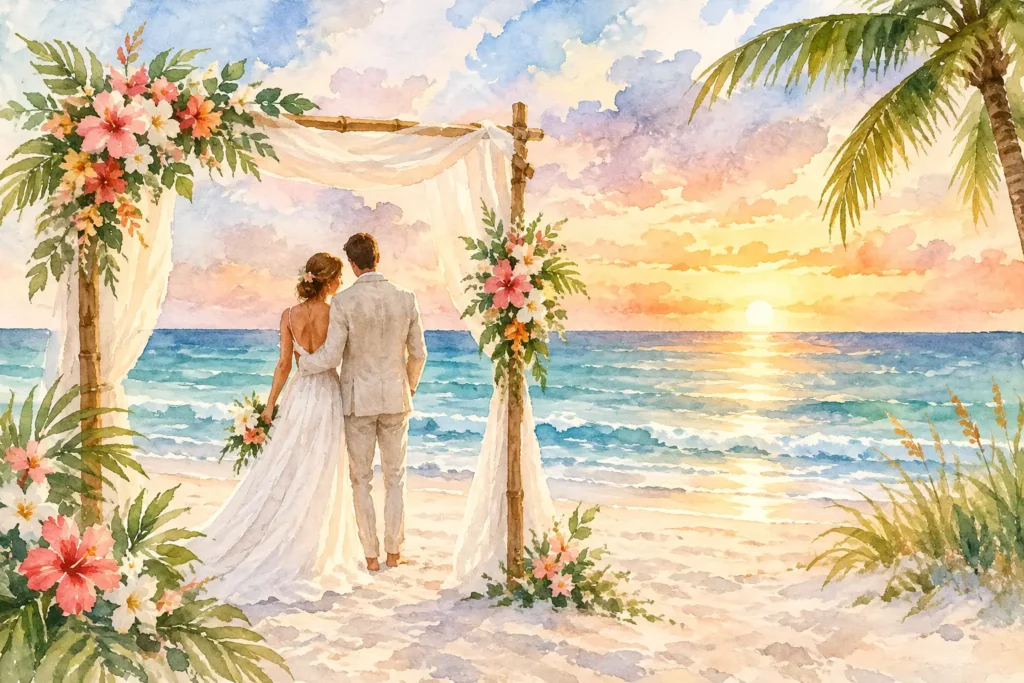
The season matters, but the hour matters just as much. For many couples, sunset is the heart of the beach wedding experience. The sky softens, the water reflects warm color, and portraits have a romantic glow that midday sun cannot replicate. A ceremony is usually scheduled before sunset, leaving time for vows, rings, a kiss, and photographs as the light changes.
Sunset timing shifts throughout the year. In winter, it comes earlier, while summer evenings give you more daylight. Your officiant and photographer should build the schedule around the actual sunset time for your wedding date rather than choosing a ceremony hour by habit.
Morning ceremonies offer another beautiful option, particularly from late spring through early fall. The beach is often quieter, the temperature is gentler, and the light can be clean and luminous. For an elopement or a very small gathering, a morning ceremony can feel private, peaceful, and wonderfully unhurried.
Midday is usually the most challenging choice. The sun is stronger, squinting is more likely in photographs, and the sand can be hot underfoot. If midday is your only option, consider a location with easy access, short ceremony length, shade for guests when possible, and attire chosen for comfort.
What Crowds, Tides, and Beach Rules Mean for Your Date
A beach is a public, living setting, not a ballroom with walls and a fixed schedule. That is part of its charm, but it calls for a little practical planning. Seasonal visitors, holiday weekends, spring break, and local events can all influence how busy a beach feels.
Weekdays are often calmer than Saturdays, especially during peak travel season. A smaller guest count also gives you more flexibility in selecting a scenic location that would be less suitable for a large group. If you are envisioning only the two of you or a handful of loved ones, you may have more choices than couples planning a traditional wedding party.
Tides are another detail worth considering. A higher tide can narrow the visible beach, while wind may change the look and feel of the shoreline. Local conditions can also affect access points and available space. Permit requirements and beach rules vary by location and can change, so it is wise to confirm the current requirements well before your wedding day.
This is where experienced local guidance brings real peace of mind. Florida Weddings by Alissa helps couples look beyond a pretty online photo and consider the details that create a calm ceremony: the best access point, a fitting ceremony time, space for guests, floral delivery, photography, and where to celebrate afterward.
Plan for the Experience You Want
There is no single perfect month for every couple. If your priority is mild weather and a classic sunset celebration, choose winter or spring and reserve your date early. If you value a quieter beach, warmer water, and more flexibility, summer may be a wonderful fit with a sensible weather plan. If you are planning around family travel, holiday schedules, or a meaningful anniversary date, the right preparation can make almost any season feel special.
Think about the feeling you want to remember. Do you picture barefoot vows at golden hour, a breezy winter evening with your closest family, or a private morning on the shore before the day begins? Once that feeling is clear, the ideal date becomes much easier to find.
The beach does not need to be perfect to be beautiful. With the right season, a well-timed ceremony, and a plan that leaves room for Florida’s natural rhythms, your wedding day can stay focused where it belongs: on the promise you are making and the person standing beside you.